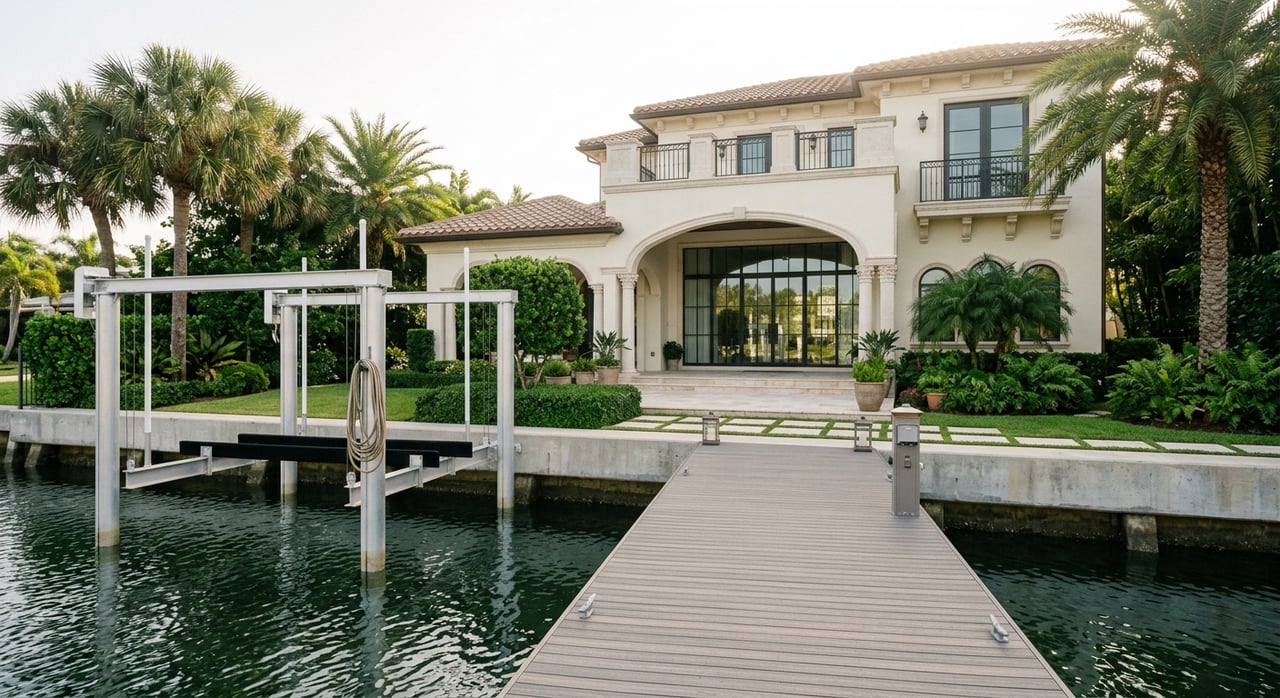
If you love the idea of stepping from your backyard to your boat, Lighthouse Point stands out for a very practical reason: boating is built into the city itself. This is not a place where waterfront living feels occasional or symbolic. It is part of the street map, the housing stock, and the daily rhythm of life. If you are exploring a home here, understanding how the canals, bridges, docks, and inlet access work can help you buy with far more confidence. Let’s dive in.
Boating Shapes Lighthouse Point
Lighthouse Point is a compact, mostly built-out residential city where water access is part of the layout. City materials note that about 80% of residences are single-family homes, and many sit along 18 miles of waterways. The city’s canal system is man-made and bulkheaded, which makes this a distinctly canal-centered market.
That matters if you are searching for a boating property, because the appeal here is not just a view. It is the way the home and the water connect. In Lighthouse Point, a waterfront address can mean direct day-to-day boating utility, not simply proximity to the coast.
The city also notes that more than 95% of Lighthouse Point is already developed, with few vacant lots remaining. That limited supply helps explain why existing waterfront homes continue to attract attention from buyers who want established dockage and immediate access to the local boating network.
Inlet Access Is a Major Draw
For many boaters, the biggest selling point in Lighthouse Point is the route to open water. The Intracoastal Waterway runs the full length of the city, and the Hillsboro Inlet sits along the southeastern edge. That creates a strong practical advantage for owners who want to get out on the water without a long idle run.
Local marina operators highlight this same benefit. PORT 32 says its Lighthouse Point Marina sits on the Intracoastal Waterway less than half a nautical mile from Hillsboro Inlet, while Lighthouse Point Yacht Club notes that its marina is just minutes from the Intracoastal and the inlet. For a buyer, that kind of proximity can translate into easier early-morning departures, quicker ocean access, and less time navigating inland channels.
This is one reason boating buyers often focus so closely on location within the city. Two homes may both be waterfront, but the one with a shorter, simpler route to the inlet may offer a very different ownership experience.
Not All Waterfront Homes Function the Same
A waterfront address is only the starting point. If you are buying with a specific vessel in mind, the real question is how usable that dock and route will be for your boat.
Bridge clearance is one of the most important details to check. In June 2024, the city adopted a Bridge Replacement Master Plan that identified several bridges over local waterways, including Sample Road, NE 31st Court, NE 28th Street, NE 29th Street, NE 24th Avenue, NE 49th Street, and NE 48th Street. A later city request for qualifications also stated that replacement design should maximize clearance under the bridge, which shows how relevant this issue is for taller vessels.
For you as a buyer, that means route planning should be part of the home search. A property may have a private dock and beautiful canal frontage, but if low bridges stand between you and the inlet, the home may not suit your current boat or your future plans.
Why route planning matters
The best boating home is not always the one with the largest water frontage. It is often the one that best matches your vessel’s needs.
Before you make an offer, it helps to confirm:
- The number of bridges between the dock and the Intracoastal
- Clearance concerns for your boat’s height
- Canal depth and navigability for your boat’s draft
- Turning room and canal width for your boat’s beam and handling
- The practical distance and time to reach Hillsboro Inlet
These are the details that can turn a good-looking waterfront home into either a seamless fit or a frustrating compromise.
Strong Boating Infrastructure Adds Appeal
Another reason boaters are drawn to Lighthouse Point is that the local infrastructure supports the lifestyle well. For a relatively small residential city, the boating network is notably robust.
Lighthouse Point Yacht Club says it offers short-term dockage for all and long-term dockage for members, with slips for boats from 20 to 120 feet. Its marina services include dockside pump-out and mobile fueling. PORT 32’s Lighthouse Point Marina reports 102 wet slips for vessels from 25 to 80 feet, along with a fuel dock, live bait station, ship store, restaurant, and quick ocean access.
That marina support adds flexibility for owners. Even if your home has a private dock, nearby fuel, service, and short-term docking options can make boating more convenient for you and your guests.
Fueling and Upkeep Are Part of the Picture
In a market like Lighthouse Point, boating convenience is not only about access. It also includes how the city manages the working parts of waterfront ownership.
The city directly regulates mobile bunkering. According to its fire-rescue information, fueling at the dock is allowed only through companies that are permitted and inspected by the city, with annual permit and insurance requirements. That structure helps show that waterfront operations here are managed through clear local rules rather than informal practice.
Canal maintenance also matters. A municipal dredging request for proposals states that the city maintains navigable canal channels to 5.0 feet below mean low water, with a typical 40-foot bottom width. For buyers, that is an important reminder that canal usability depends not just on a home’s lot line, but also on the broader condition and maintenance of the surrounding waterways.
Existing Waterfront Inventory Carries Real Value
Because Lighthouse Point is largely built out, buyers are usually choosing from existing waterfront homes rather than new shoreline opportunities. That tends to make each property more specific in character and utility.
Some homes may offer updated docks and seawalls. Others may need improvements or further review. In this type of market, the value often lies in the combination of location, route to the inlet, canal position, and the current condition of the waterfront features.
This is also where an advisory approach matters. Looking at a boating property here means going beyond finishes and floor plans. You want to understand how the home works on the water, what improvements are already in place, and what future updates may require city review.
What Boating Buyers Should Verify
If you are serious about buying in Lighthouse Point, it helps to treat the boating side of the property with the same care as the home itself. The city’s permit forms include a dedicated checklist for docks and seawalls, which is a useful signal that these features deserve close review.
A practical buyer checklist often includes:
- Dock dimensions and condition
- Seawall condition and any visible maintenance issues
- The route from the property to the Intracoastal and inlet
- Bridge clearance along that route
- Flood-related documentation, including elevation-related records where available
- Insurance considerations tied to flood exposure and storm readiness
These checks can help you avoid buying a home that looks ideal on paper but creates limitations once you start using the dock.
Flood and Resilience Planning Matter Too
As appealing as the boating lifestyle is, waterfront ownership in Lighthouse Point also comes with risk planning. The city identifies Lighthouse Point as a flood-prone area and directs residents to flood insurance information, FEMA flood maps, and elevation certificates.
The city is also pursuing resiliency planning and adaptation work related to sea level rise. For you as a buyer, this means the best boating property is often the one that balances dock convenience with long-term resilience, manageable insurance costs, and a realistic storm-readiness plan.
That does not reduce the appeal of the market. It simply means smart buyers look at the full ownership picture. A great waterfront home should support both enjoyment and preparation.
Why Boaters Keep Looking Here
Lighthouse Point continues to attract boating buyers because it offers something very specific: a residential setting where boating is woven into the city’s physical design. The waterways are not an afterthought. They are central to how many homes function and why the market feels distinct.
If you want a property where private dockage, quick access to the Intracoastal, and a short run to the inlet are part of everyday life, Lighthouse Point deserves a closer look. The key is knowing that not every waterfront home offers the same boating experience, even within the same city.
With the right guidance, you can narrow in on the homes that truly fit your vessel, your routine, and your long-term goals. If you are exploring waterfront opportunities in South Florida, Nestseekers Palm Beach can help you evaluate the property details that matter most.
FAQs
Why do boaters like Lighthouse Point, Florida?
- Boaters are often drawn to Lighthouse Point because many single-family homes sit on man-made canals, the Intracoastal Waterway runs the city’s length, and Hillsboro Inlet is close by for ocean access.
What should buyers check before buying a waterfront home in Lighthouse Point?
- Buyers should verify dock and seawall condition, the route to the Intracoastal and inlet, bridge clearance, canal depth, and flood-related documentation before making an offer.
Are all waterfront homes in Lighthouse Point equally useful for boating?
- No. Two waterfront homes can offer very different boating utility depending on bridge restrictions, canal layout, dock setup, and how easily your boat can reach the inlet.
Can you fuel a boat at a private dock in Lighthouse Point?
- Yes, but mobile bunkering is allowed only through companies that are permitted and inspected by the city.
Is Lighthouse Point mostly new construction or existing waterfront homes?
- Lighthouse Point is largely built out, with more than 95% of the city developed, so buyers are typically choosing from existing waterfront inventory rather than new shoreline lots.
Does flood risk matter when buying a boating home in Lighthouse Point?
- Yes. The city identifies Lighthouse Point as flood-prone, so buyers should review flood insurance considerations, FEMA flood maps, and available elevation-related records as part of their decision-making.