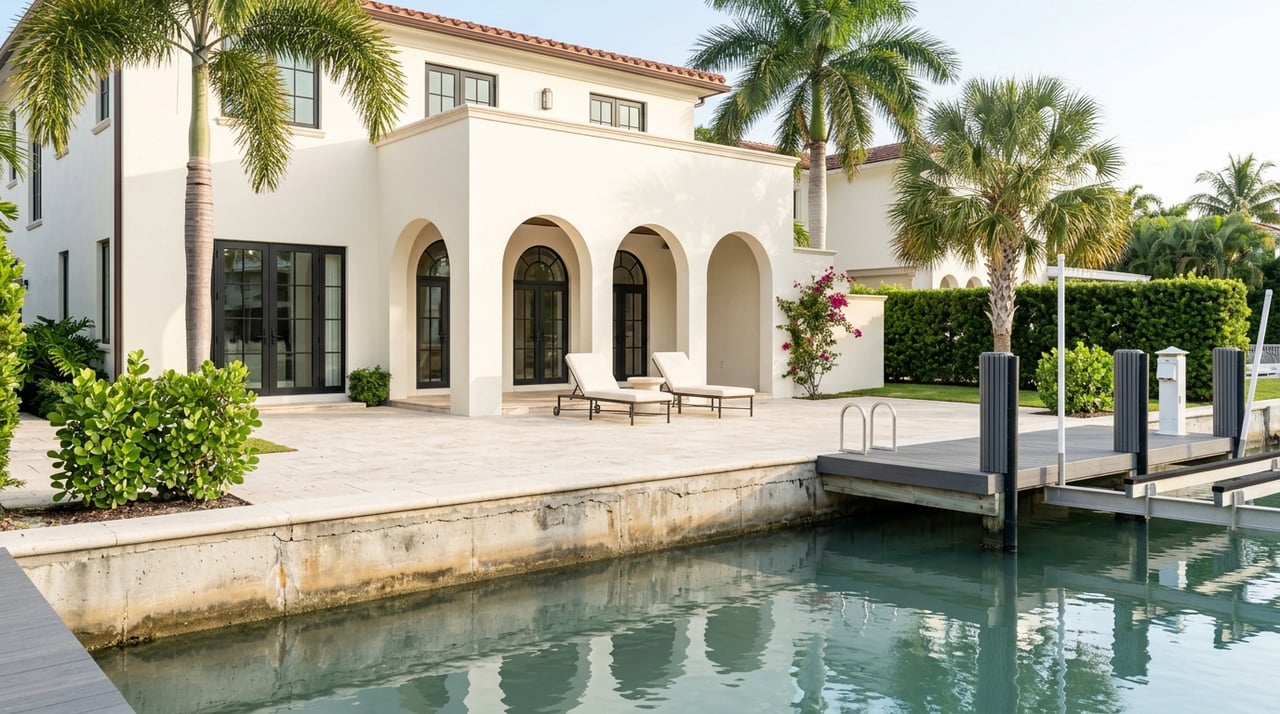
If you are shopping for a waterfront home in Lighthouse Point, the view is only part of the story. In this compact Broward County city, the better question is whether a property actually works for the way you plan to live and boat. From bridge clearances to seawall condition to flood review, a smart purchase starts with practical details. Let’s dive in.
Why Lighthouse Point Appeals to Waterfront Buyers
Lighthouse Point is a small, established city in Broward County with about 10,756 residents. The housing market is largely owner-occupied, and the city reports that about 80% of its homes are single-family properties. That gives the area a more residential feel than a resort-driven one.
The city is also almost fully built out, with many homes fronting roughly 18 miles of waterways. That matters because inventory is often less about brand-new land opportunities and more about choosing between renovated homes, older properties with updates ahead, or tear-down and rebuild potential. In Lighthouse Point, the right property is often the one that matches your boating needs, lot layout, and long-term plans.
Understand the Waterfront Lifestyle Here
Lighthouse Point is not primarily a beach-front market. The city describes its canal system as man-made and bulkheaded, and the Intracoastal Waterway runs the length of the city. There are essentially no beaches or natural shores within city limits.
For you as a buyer, that means value often comes from boating function, dockage, and water access rather than sand frontage. A beautiful home is important, but so is the question of how easily you can leave the dock, reach the Intracoastal, and time your route to the ocean.
Start With Your Boat, Not Just the House
If you own a boat, or plan to, start your search with the boat’s dimensions and your usual boating habits. Air draft, dock needs, turning space, and your preferred route to open water can affect whether a home is truly a fit.
Hillsboro Inlet is the key ocean access point for many Lighthouse Point buyers. NOAA notes that the SR A-1-A drawbridge at Hillsboro Beach opens on signal, but from 7 a.m. to 6 p.m. it opens only on the hour, quarter-hour, half-hour, and three-quarter hour. That schedule can shape how easy your offshore runs feel on a regular day.
Bridge Clearances Matter More Than You Think
Nearby Intracoastal bridge clearances are a major part of the decision. NOAA lists several bridges in this Broward stretch with clearances that can directly affect route planning, including:
- Deerfield Beach SR 810 at 21 feet
- Northeast 14th Street at 15 feet
- Atlantic Boulevard at 15 feet
- Commercial Boulevard at 15 feet
- Oakland Park Beach Boulevard at 22 feet
- Sunrise Boulevard at 25 feet
A home that looks ideal on paper may be less practical if your boat’s air draft does not match the route you need to use. Even a small change in location can make a noticeable difference.
Route Conditions Also Count
Bridge height is not the only boating issue to review. NOAA also warns of hazardous currents where the Hillsboro Drainage Canal meets the Intracoastal near Deerfield Beach. That is a helpful reminder that access is about the full route, not only the dock behind the house.
NOAA also notes that between Hillsboro Inlet and Pompano Beach, including Lake Placid, there are several marinas and repair facilities. For some buyers, being near those services adds convenience and flexibility.
Look Closely at Dock and Seawall Condition
In Lighthouse Point, waterfront due diligence should always include the dock and seawall. These features are not side notes. They can affect property usability, future renovation plans, and your budget after closing.
The city’s permit checklist for docks and seawalls requires outside-agency approvals where applicable and an updated dock and seawall survey before final inspection. That survey must include seawall height and dock length. For a new dock, the city also requires signed and sealed drawings and a survey showing dock dimensions.
What to Review Before You Make an Offer
When you compare homes, ask for details that go beyond listing photos. Focus on what is documented and what fits your intended use.
Use this checklist as a starting point:
- Confirm dock length and layout against the boat you own or plan to buy
- Ask whether there are lifts or accessory structures and whether they are permitted
- Request the seawall’s age and any available condition history
- Ask whether engineer letters already exist for the seawall
- Review permit history for newer-looking docks, seawalls, or additions
- Verify whether the survey is current, especially if it is older than 12 months
For major waterfront additions or remodels, the city requires two signed and sealed engineer letters on seawall condition and whether the seawall can support added upland improvements. That makes seawall strength more than a maintenance question. It can become a financing, inspection, and negotiation issue.
Check the Home’s Age and Improvement Path
Because Lighthouse Point is largely built out, many waterfront buyers are evaluating older homes. Some have been fully renovated, while others may need substantial work to align with your goals.
If you are considering an addition or major remodel, review the city’s requirements early. A property may have the right address and water access, but the seawall, survey status, or existing improvements may shape how simple or complex your plans become.
Broward County also requires building safety inspections on buildings over 25 years old and over 3,500 square feet, though single-family homes, duplexes, and buildings under 3,500 square feet are exempt. In a city with older waterfront housing stock, that is one more reason to study the property’s condition carefully rather than assume cosmetic updates tell the full story.
Put Flood Review Near the Top of Your List
Flood review should happen early, not after you have mentally committed to a house. The city states that Lighthouse Point is in a flood-prone area and encourages adequate flood insurance. It also notes that a large portion of the city is subject to the 100-year flood, while the western portion faces 100- to 500-year flood conditions.
The city’s building department keeps FEMA elevation certificates for some floodplain properties, and buyers are directed to check flood zones through the FEMA Flood Map Service Center. For you, that means flood zone, elevation, drainage, and seawall condition should all be part of your first-round evaluation.
Why Resilience Planning Matters
In 2024, Lighthouse Point said it received a $250,000 Resilient Florida grant for a vulnerability assessment and adaptation plan. The city identified future risks tied to coastal flooding, heavier rain, stronger storms, and sea level rise.
That does not mean every property carries the same level of concern. It does mean a thoughtful buyer should weigh resilience features alongside finishes and floor plans. A well-located home with solid documentation may offer more confidence than a prettier listing with unanswered questions.
A Simple Way to Compare Waterfront Homes
When you are narrowing options, it helps to compare homes through a practical lens instead of an emotional one alone.
| Category | What to Check |
|---|---|
| Boating access | Inlet route, bridge clearances, drawbridge timing |
| Dock setup | Dock length, layout, lift needs, turning space |
| Seawall | Age, condition, surveys, engineer documentation |
| Property records | Permit history, recent improvements, survey date |
| Flood profile | Flood zone, elevation certificate availability, drainage |
| Long-term fit | Renovation potential, rebuild considerations, boating lifestyle match |
This kind of review helps you separate a home that photographs well from one that works well.
Why Guidance Matters in a Niche Market
Lighthouse Point sits within the broader South Florida boating ecosystem, but it offers a different feel than larger yachting hubs. NOAA describes Fort Lauderdale as a market where several thousand yachts base in winter, while Lighthouse Point reads more as a smaller-scale, residential, canal-first alternative.
That nuance matters when you buy. You are not only purchasing a home. You are choosing a water route, a dock setup, a flood profile, and often an older property with meaningful infrastructure questions. Clear guidance can help you evaluate each layer with more confidence.
If you are considering a waterfront move in Lighthouse Point or comparing boating-friendly options across South Florida, Nestseekers Palm Beach can help you approach the search with a calm, informed strategy.
FAQs
What makes Lighthouse Point different from other South Florida waterfront markets?
- Lighthouse Point is a small, mostly built-out, owner-occupied city where waterfront value is often tied to boating access, dockage, canal layout, and seawall condition rather than beach frontage.
What should you check before buying a waterfront home in Lighthouse Point?
- Review the boat route, bridge clearances, drawbridge timing, dock dimensions, seawall condition, permit history, survey date, and flood profile before moving forward.
Why do bridge clearances matter for Lighthouse Point boat owners?
- Nearby Intracoastal bridges range from 15 to 25 feet in several key spots, and that can directly affect whether your boat can travel your preferred route easily.
How important is the seawall when buying in Lighthouse Point?
- The seawall is extremely important because city requirements for waterfront work can involve surveys and engineer letters, and seawall condition can affect renovation plans, inspections, and negotiations.
Is Lighthouse Point considered a flood-prone area?
- Yes. The city states that Lighthouse Point is in a flood-prone area, and a large portion of the city is subject to the 100-year flood, so flood review should be part of your early due diligence.